Independent
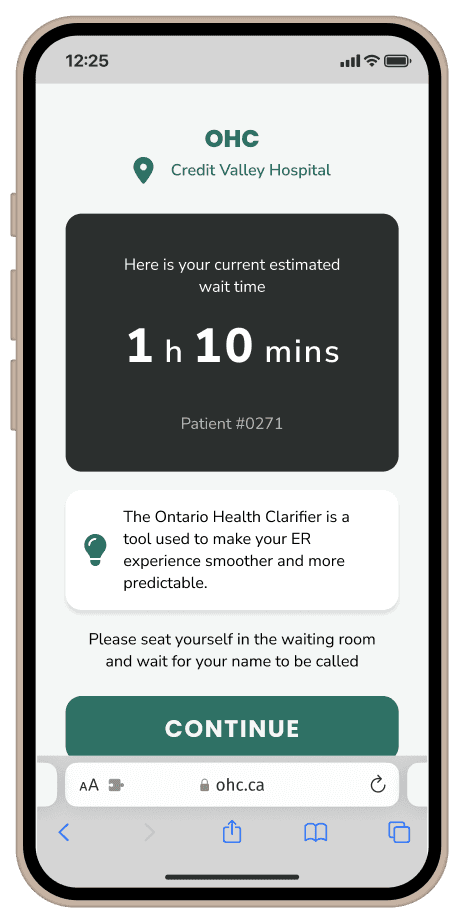
Ontario's emergency rooms are under heavy strain and patients, especially those with less urgent needs, often wait hours for care. Beyond the inconvenience, long waits with minimal updates lead to rising anxiety, sensory overload from crowded waiting rooms, and a sense of being ignored, which can worsen patients' physical and psychological state.
These effects often show up as frustration or agitation toward staff, patients needing more reassurance and some leaving before ever being seen. Which leads to further strain to an already stretched system.
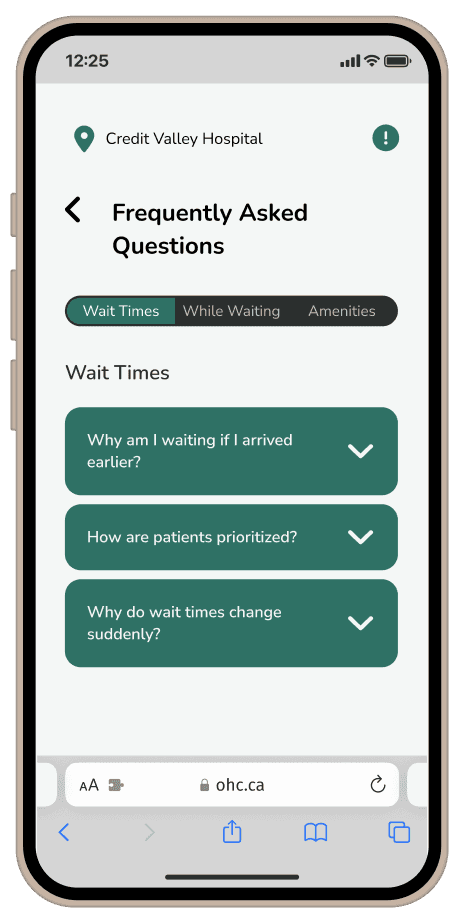
While fixing the root problem requires systemic change (more funding, staff and infrastructure), the opportunity here is more focused and achievable: improving how information flows to patients during their wait and improving wait experiences for low-acuity (low-urgency) patients.